
Summary
Hypothesis Planned Exploration (HyPE) is a novel approach to exploration in meta-reinforcement learning. Given the same sample budget, our method successfully adapts four times more often than the standard passive strategy in Natural Language Alchemy, a modified version of Alchemy.
Summary
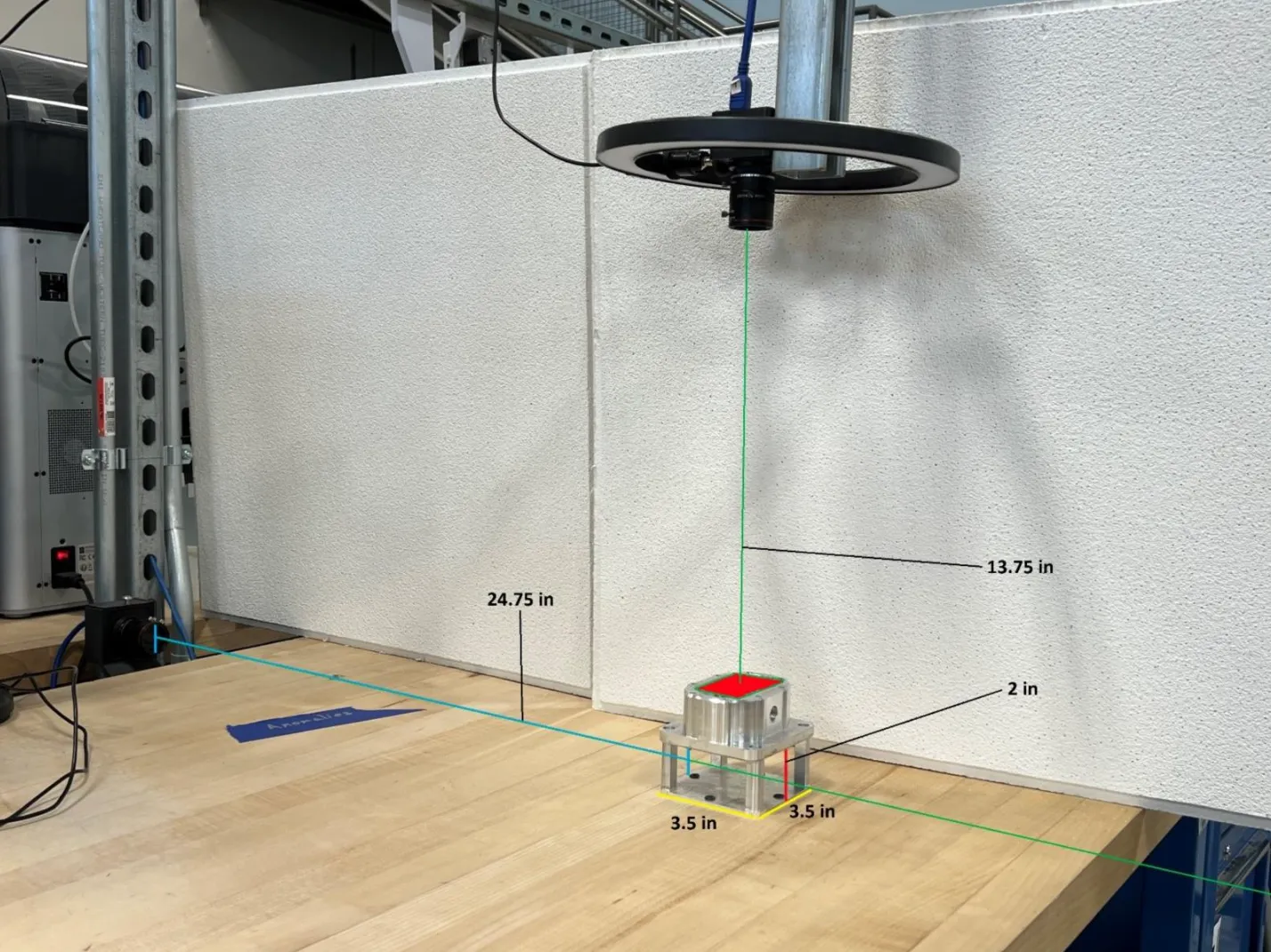
At Purdue’s Digital Enterprise Center, my research team was dedicated to developing a manufacturing workflow which integrates IoT tools, computer vision, and Solumina MES to streamline the assembly process. To showcase this workflow, we assembled a commercial oil pump over three workstations that would each be responsible for a subset of the assembly steps. As a part of this project, I built software to perform computer-vision-aided foreign debris detection, assembly verification, and comprehensive data collection.
Notable Work
- For a faster training pipeline, I leveraged image augmentation to increase our dataset by up to 64 times, allowing us to efficiently add new objects of interest to our set of foreign objects.
- Created a CI/CD pipeline using the pdoc library alongside GitHub Workflow, enabling automated building and deployment of a documentation page for the data wrangling and model training scripts.
- Using Rust, Tauri, and Svelte, I built a desktop application prototype for multi-view real-time object detection. Starting with example object detection code from the official YOLOv8 repository, I improved performance 5x by parallelizing pre and post-processing using Rayon.
- Re-wrote legacy Python code, correcting major issues like unblocked concurrent file access and system calls which launched new command-line processes.
- Integrated the computer vision pipeline with Atlas Copco’s PF6000 controller for real-time feedback on the assembly process. This will allowed us to detect and correct errors in real-time, reducing the need for manual inspection and rework. Assembly data is stored in Solumina MES via its native REST API for enhanced traceability and analysis.